The field of architecture is constantly pursuing innovation and progress, and the introduction of new materials is one of the key factors driving transformation within the industry. By utilizing diverse advanced materials—from cutting-edge composites to nanomaterials, from renewable energy materials to transparent ceramics and smart materials—designers are breaking traditional constraints and expanding the creative possibilities of architectural design. These new materials not only make building structures lighter and stronger but also unlock greater functional and formal potential for architecture.
This article will introduce several new materials currently used in the construction industry, delve into their characteristics and advantages, and explore their practical application in architectural design through case studies of building projects. It will also examine the profound impact these materials have on architectural form and function.
一、Types and Properties of New Materials
In the realm of contemporary architectural design, the emergence of new materials offers designers diverse options, thereby driving continuous innovation within the field. Below are five representative new materials whose unique properties open up new possibilities for architectural design.
1. Advanced Composite Materials
Characteristics:Composed of two or more different types of substrates, it exhibits superior performance compared to a single material.
Application:Carbon fiber-reinforced composites have garnered significant attention due to their lightweight properties, high strength, and corrosion resistance. They can be utilized to reduce structural load and enhance wind resistance.
2.Nanomaterials
Characteristics:Possesses unique physical and chemical properties at the nanoscale.
Application:Nano-coating endows building surfaces with self-cleaning capabilities, offering waterproofing and stain resistance, along with durability and maintainability.
3. Renewable Energy Materials
Characteristics:Based on renewable resources, such as solar materials and wind energy materials.
Application:Solar panels are embedded into building surfaces, providing clean energy for the structures.
4. Transparent Ceramic Materials
Characteristics:High transparency, corrosion resistance.
Application:Provides excellent daylighting effects, lends a modern aesthetic to buildings, and serves as an outstanding structural material.
5. Smart Materials
Characteristics:Responds to changes in the external environment, such as dimmable smart glass.
Application:Enabling buildings to adapt to environmental needs, achieving efficient energy utilization.
These five new materials each possess distinct characteristics. Designers can flexibly select and utilize these materials according to project requirements, unlocking greater innovative possibilities for architecture.
二、Innovative Applications in Architectural Design
These case studies demonstrate the unique properties of new materials in architecture while providing practical inspiration for designers regarding the influence of materials on design.
1. Advanced Composite Materials
Case 1: THE CALGARY CENTRAL LIBRARY IN ALBERTA
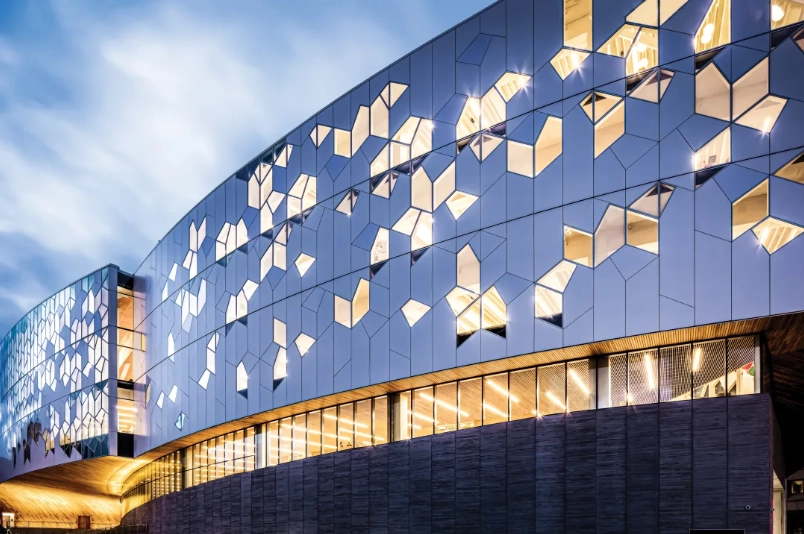
Metal Composite Material (MCM) is versatile and easy to manufacture, enabling the creation of a world of nearly limitless complex forms and shapes. Thermoplastic cores make MCM lighter in weight without sacrificing rigidity. This composite is affordable, easy to install, stable, vibration-dampening, low-maintenance, and resistant to deformation from expansion and contraction caused by changing weather conditions. Designed by Snohetta and DIALOG, the Calgary Central Library in Alberta combines metal composite materials with glass units to create crystalline geometric forms on its facade. Beyond facilitating the creation of unique visual effects, metal composite materials are exceptionally well-suited to the region's harsh winter weather.
2. Nano-materials
Case 2: Church of Giubileo, Rome
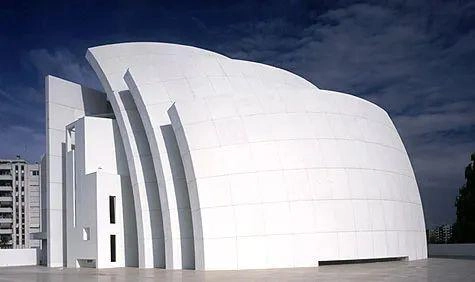
The exterior walls of Jubilee Church feature a photocatalytic, self-cleaning nanocoating that breaks down grime through natural light reactions, maintaining the building's pristine appearance over time. This nanotechnology not only reduces maintenance costs for the building's facade but also preserves a refreshingly clean white surface that enhances the visual experience for citizens.
3. Renewable Energy Materials
Case 3: Malmö Stadion, Sweden
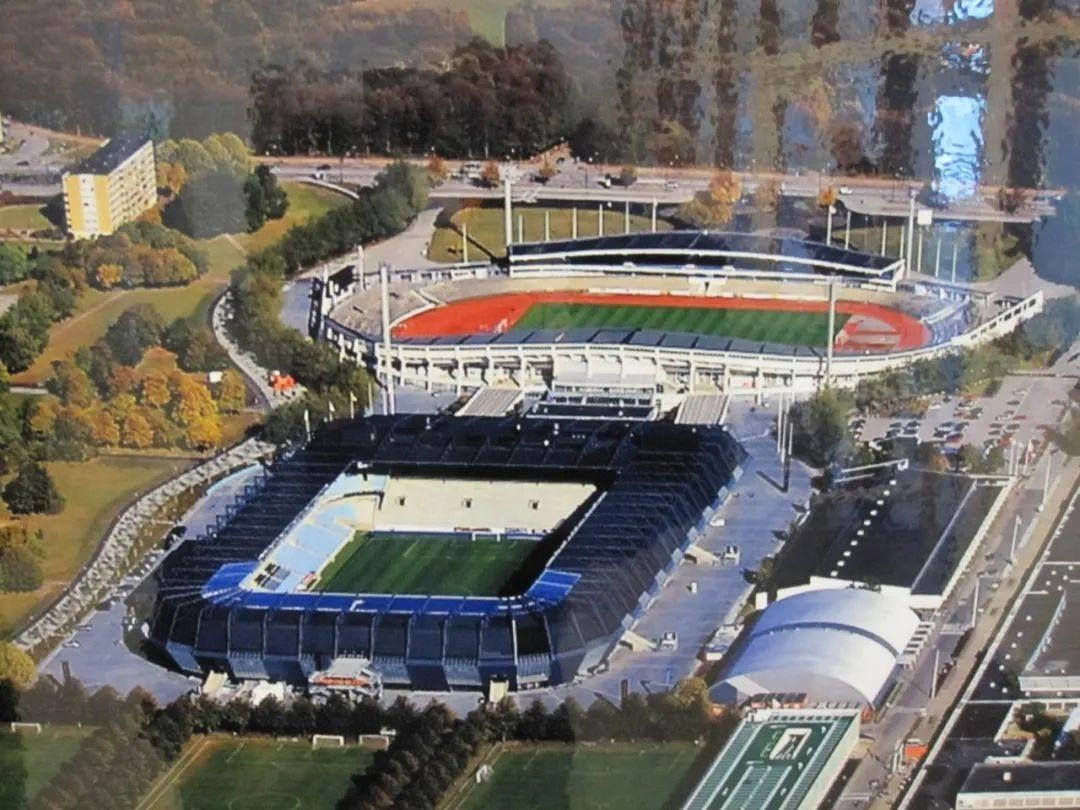
The roof of Malmö Arena is covered with solar panels, which convert sunlight into electricity through photovoltaic technology. This innovative application transforms the stadium into more than just a sports venue—it also serves as a power plant providing clean, renewable energy to the surrounding area.
4. Transparent Ceramic Materials
Case 4: Wasl Tower, Dubai
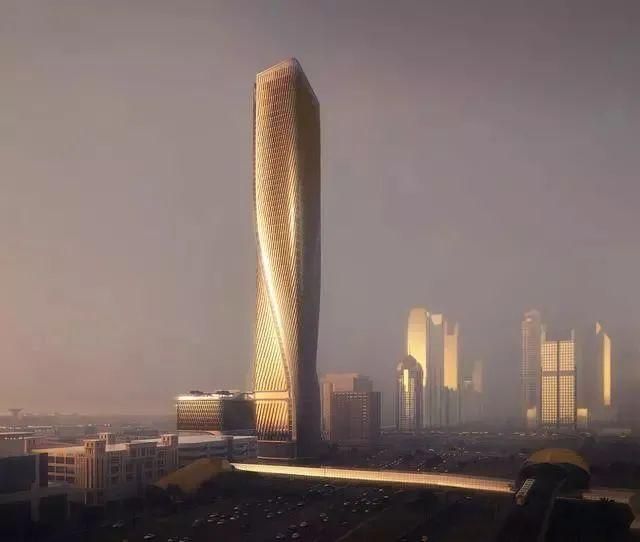
The Wasl Tower in Dubai, designed collaboratively by UNStudio and Werner Sobek, commenced construction in 2016. Upon completion, the tower will reach its full height of 302 meters, establishing itself as one of the world's tallest ceramic curtain wall skyscrapers. The tower's facade primarily utilizes clay as its base material, with glazed ceramic forming the scale-like patterns. These intricate “scales” create the geometric texture of the curtain wall. Beyond providing essential shading, these scales reflect sunlight into the building's interior.
5. Smart Materials
Case 5: Al Bahr Towers, Abu Dhabi
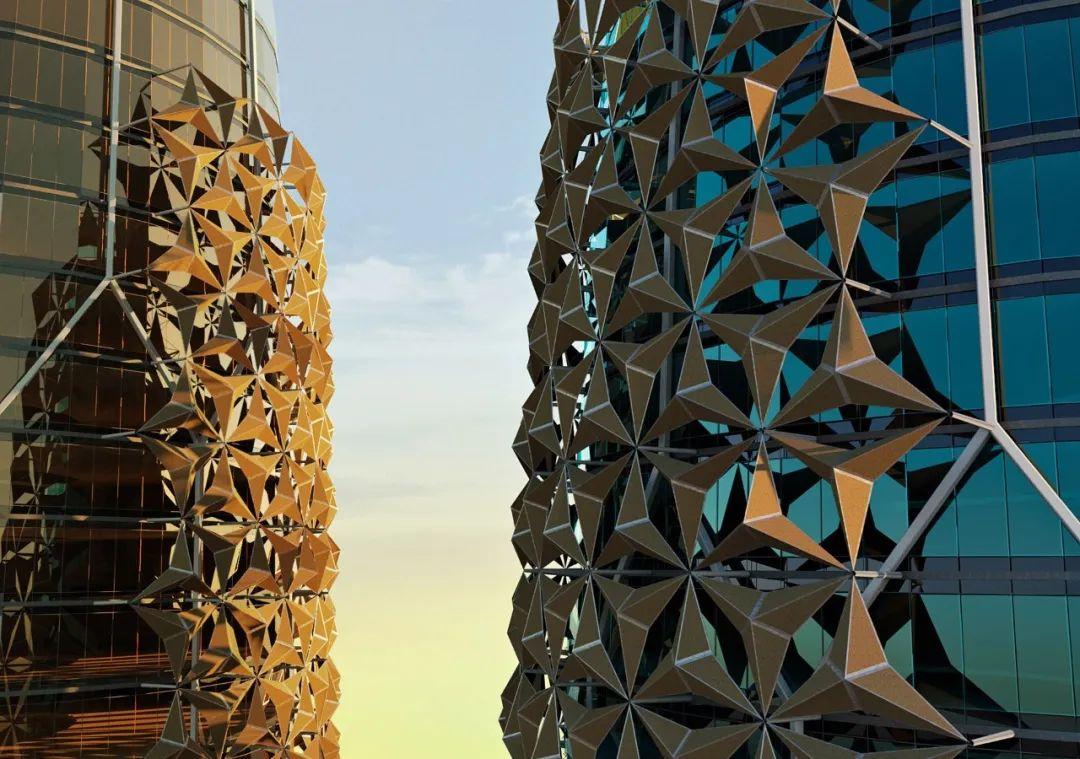
The Al Bahr Tower features an adaptive facade composed of a smart material system that automatically adjusts its degree of opening and closing based on light and temperature. This maximizes natural light utilization while mitigating the adverse effects of the Middle East's intense solar radiation.
Through these case studies, we can observe the diverse applications of various new materials in architectural design. These examples not only enhance building performance but also inject greater innovation into the design field.
三、Sustainability and Environmental Friendliness of New Materials
The application of new materials in architectural design must consider not only their innovation and functionality but also their sustainability and environmental friendliness. This section will delve into how new materials perform in these critical aspects.
1. Contributions of 3D Printing Materials to Environmental Sustainability:Some projects embody eco-friendly principles by utilizing software-controlled 3D printing in factories instead of on-site construction.
Case 1: MX3D 3D-Printed Bridge in Amsterdam, Netherlands
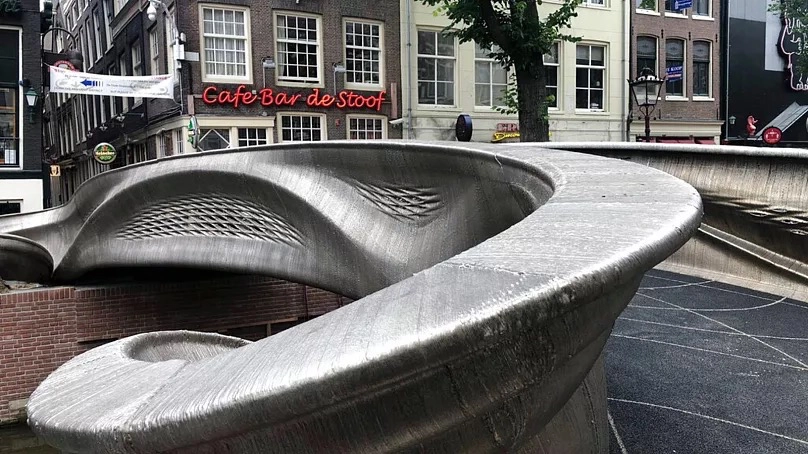
This bridge is a 3D-printed stainless steel metal structure. It combines traditional steel construction with computational design, symbolizing Amsterdam's past and future. MX3D utilized integrated control software to direct the robotic arms manufacturing the bridge in a factory, resulting in this robust, intricate, and elegant structure.
2. Sustainability of Energy-Saving Materials:The energy-saving properties of new materials play a crucial role in architectural design. Thermal insulation materials, optical materials, and high-efficiency insulating materials all help reduce energy waste in buildings and enhance their energy efficiency.
Case 2: Federal Environmental Agency Building in Berlin, Germany
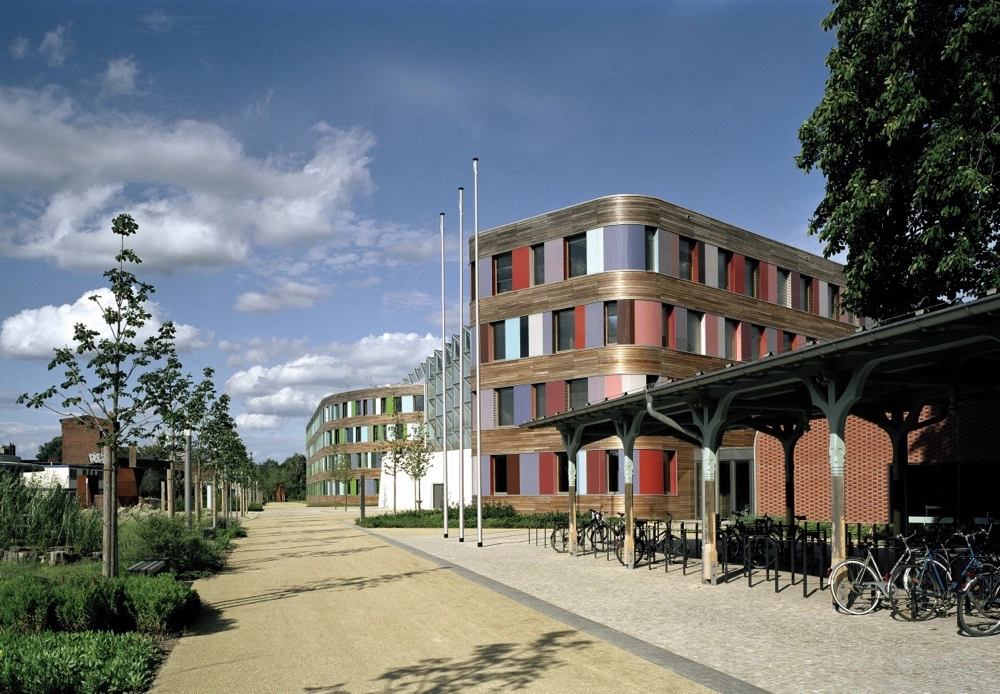
This project combines compact dimensions with highly insulating, low-energy materials to achieve exceptional thermal performance, integrated with intelligent engineering and renewable energy strategies for efficient energy utilization. It particularly benefits from a large-scale geothermal heat exchange system and solar panels. Building materials were selected for their ecological compatibility, with the most striking element being the panel facade constructed entirely from wood.
3. Environmental Benefits of Recyclable Building Materials:Certain natural materials decompose and recycle more readily under natural conditions, thereby reducing environmental pressure.
Case 3: Miyako Ecology Centre, Kyoto, Japan
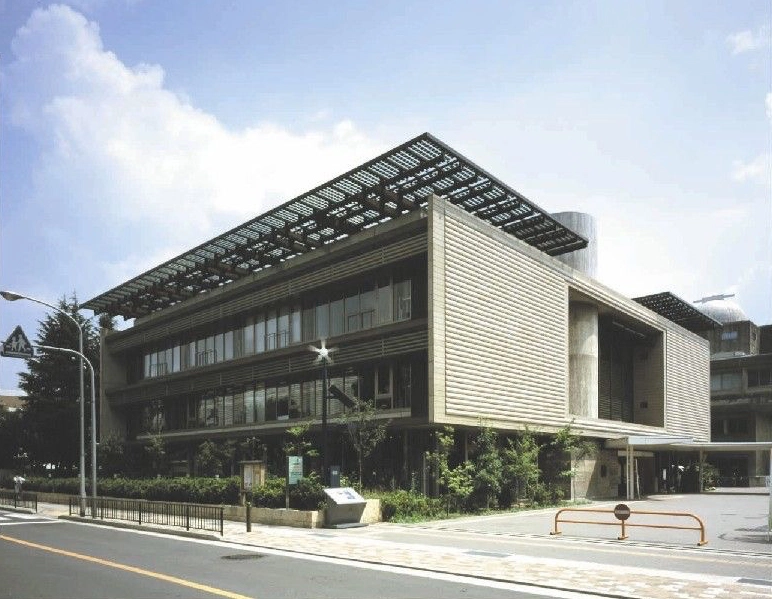
The Miyako Eco Center building incorporates solar panels, rainwater harvesting, geothermal energy utilization, highly insulated exterior walls, and the use of natural materials such as red clay tiles alongside recycled construction materials. It also features energy- and resource-efficient equipment to minimize environmental impact. The red clay tiles can undergo natural degradation at the end of the building's lifespan, and their production process has a relatively low environmental footprint.
4. Green Roofs and Sustainability:Green roofs, also known as ecological roofs, are a type of roofing material system that integrates natural elements. The fundamental components of a green roof include vegetation, soil, drainage layers, roof barriers, and irrigation systems. These elements work together to provide multiple benefits for buildings and their surrounding environments, such as absorbing rainwater, providing insulation, creating habitats for wildlife, enhancing the roof's livability and aesthetic appeal, and helping to lower urban air temperatures and mitigate the urban heat island effect.
Case 4: Green roof of the British Horse Society Headquarter
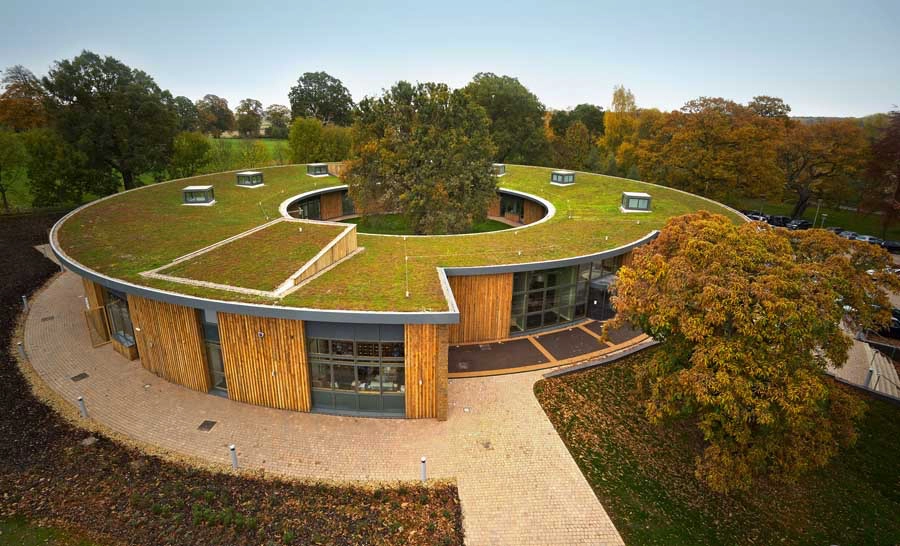
Surrounding a mature oak tree that has stood on the site for many years, the building is constructed from natural stone clad with European oak planks and topped with a sky-green roof. Its purpose is to create an ecosystem centered around the central oak. The building aims to establish a high-quality modern structure without compromising the surrounding countryside. To ensure this, materials are sourced sustainably, and the design incorporates this principle. The green roof incorporates dedicated drainage and filtration layers, topped with an extensive substrate and pre-planted vegetation. It provides thermal insulation for the building, helping maintain cool temperatures in summer and warmth in winter. Studies indicate that the thick vegetation layer can enhance the roof's energy efficiency by up to 60%.
Through these case studies, we can observe the application of new materials in sustainability and environmental protection. These examples demonstrate the practical utility of new materials in architectural design, providing robust support for environmental sustainability—selecting these materials helps reduce waste of energy and resources, lessen the burden on the environment, and achieve more sustainable development in the construction industry.
四、Brief Summary
By introducing several new materials, this article showcases their unique properties and specific application scenarios in architectural design. Overall, the use of new materials in architectural design brings unprecedented innovation and development opportunities to the industry. At the same time, we must pay corresponding attention to the sustainability and environmental friendliness of these materials to better practice in the context of environmental challenges. Through dedicated efforts, the construction industry can increasingly leverage promising new materials to advance sustainable development, creating a brighter and more eco-friendly future.